
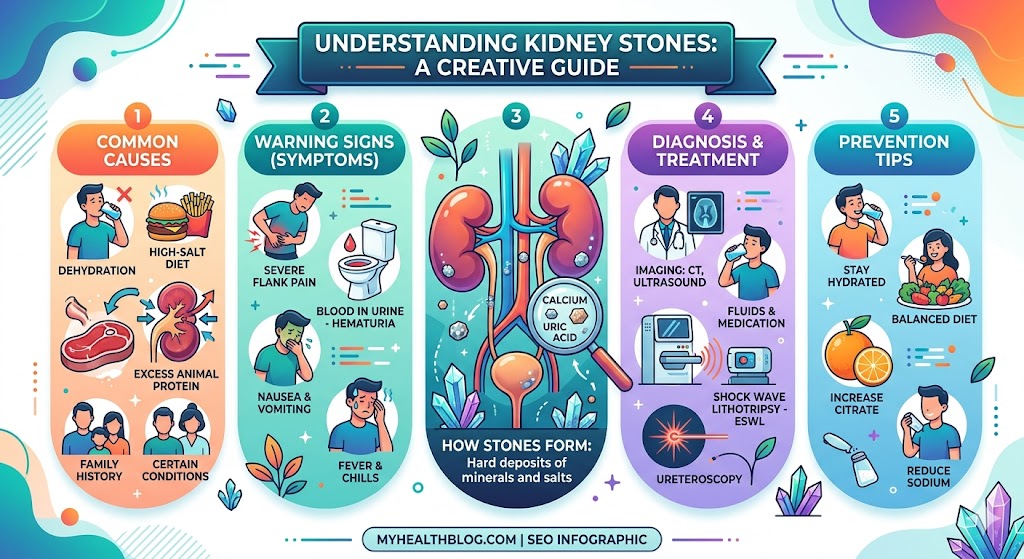
Kidney stones are a common health problem that can cause severe pain and discomfort. They form when minerals and salts present in urine stick together and become hard crystal-like stones inside the kidneys.
Some kidney stones are as small as a grain of sand, while others can grow larger and block the urinary tract. When this happens, symptoms can become very painful and may need immediate medical attention.
In this article, you will learn about kidney stones symptoms, causes, treatment, and prevention in simple language.
What Are Kidney Stones?
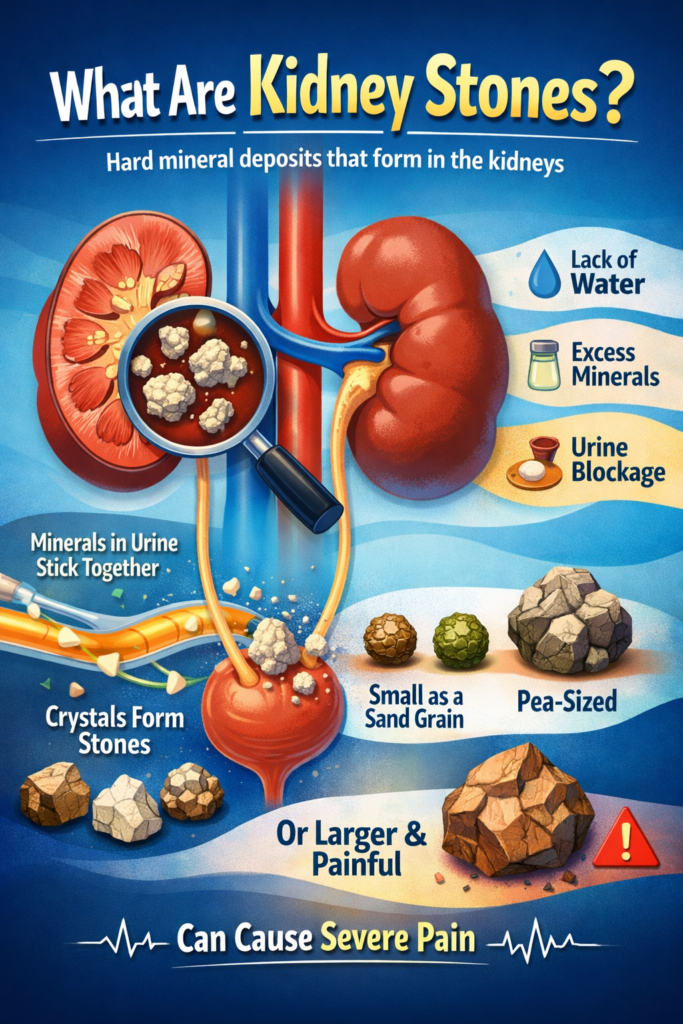
Kidney stones are hard deposits made of minerals and salts that form inside the kidneys.
The kidneys help clean your blood and remove waste through urine. When the urine contains too many minerals and not enough water, these minerals can stick together and form stones.
Doctors may also call them:
- renal stones
- kidney calculi
- nephrolithiasis
What Are Kidney Stones?
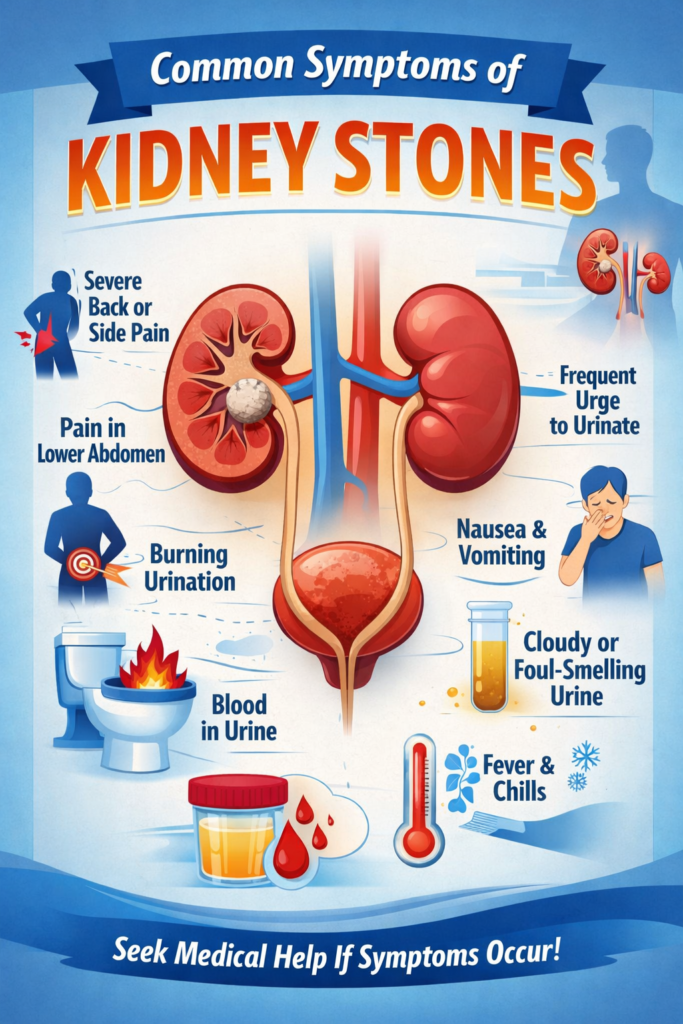
A kidney stone may not show symptoms at first. Symptoms usually start when the stone begins moving into the ureter (the tube connecting the kidney and bladder).
The most common symptoms include:
- severe pain in the back or side
- pain below the ribs
- pain that spreads to the lower abdomen or groin
- burning sensation while urinating
- blood in urine
- cloudy or foul-smelling urine
- nausea and vomiting
- frequent urge to urinate
- fever and chills (if infection is present)
Early Warning Signs of Kidney Stones
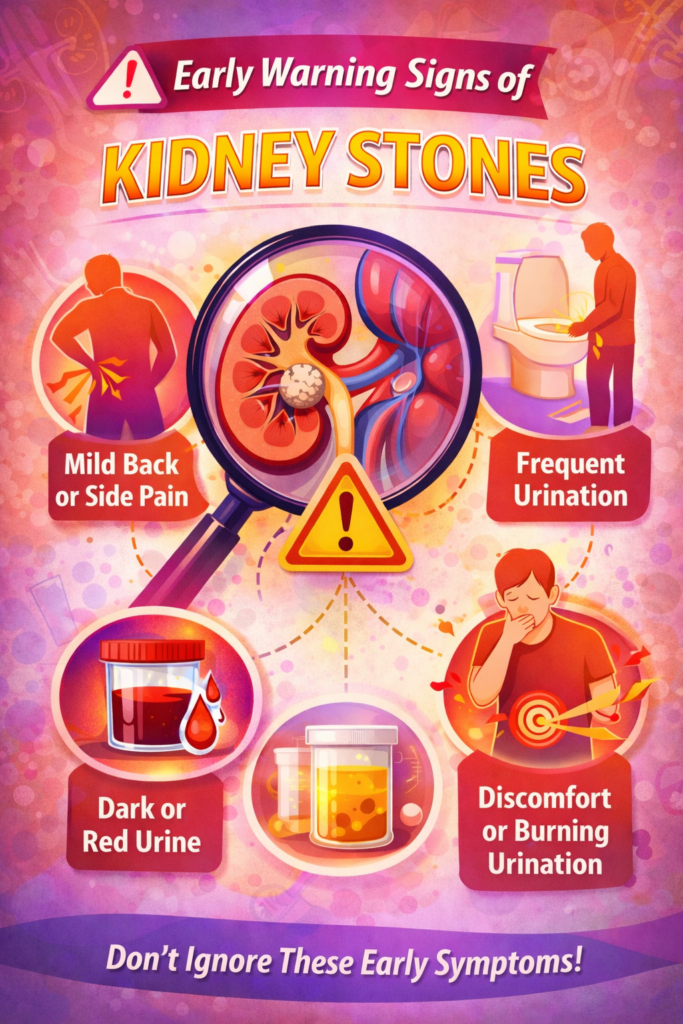
Before severe pain starts, some early symptoms may appear.
These warning signs include:
- mild pain in the lower back
- discomfort in the side
- frequent urination
- dark-colored urine
- slight burning while urinating
- nausea
These early signs are often ignored, but they may indicate that a stone is beginning to move.
Where Is Kidney Stone Pain Felt?
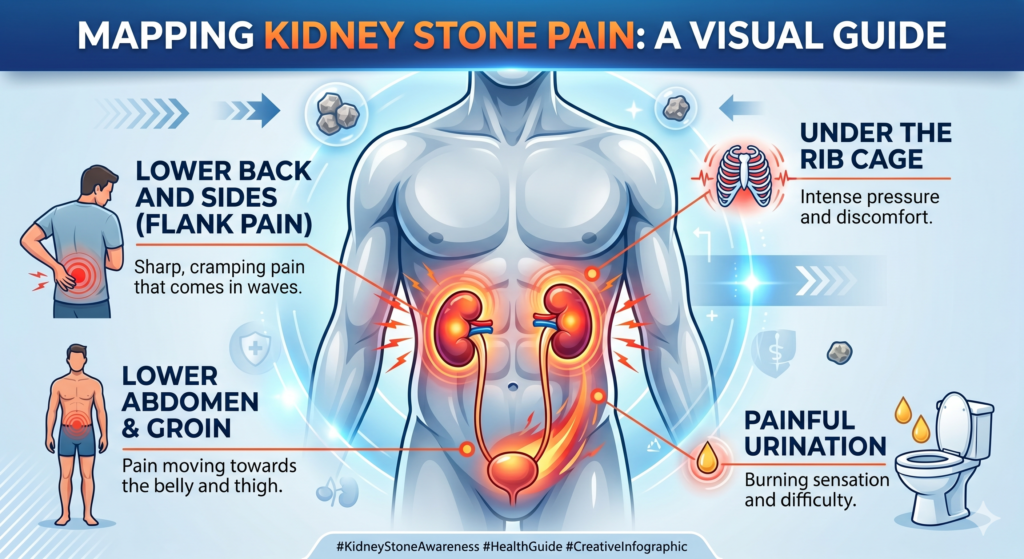
Kidney stone pain usually changes as the stone moves.
| Stone Position | Pain Location |
|---|---|
| Kidney | Side and back |
| Ureter | Lower abdomen |
| Near bladder | Groin and pelvic area |
The pain often comes in waves and may become stronger suddenly. This is one of the most common signs mentioned by leading medical sites
Causes of Kidney Stones